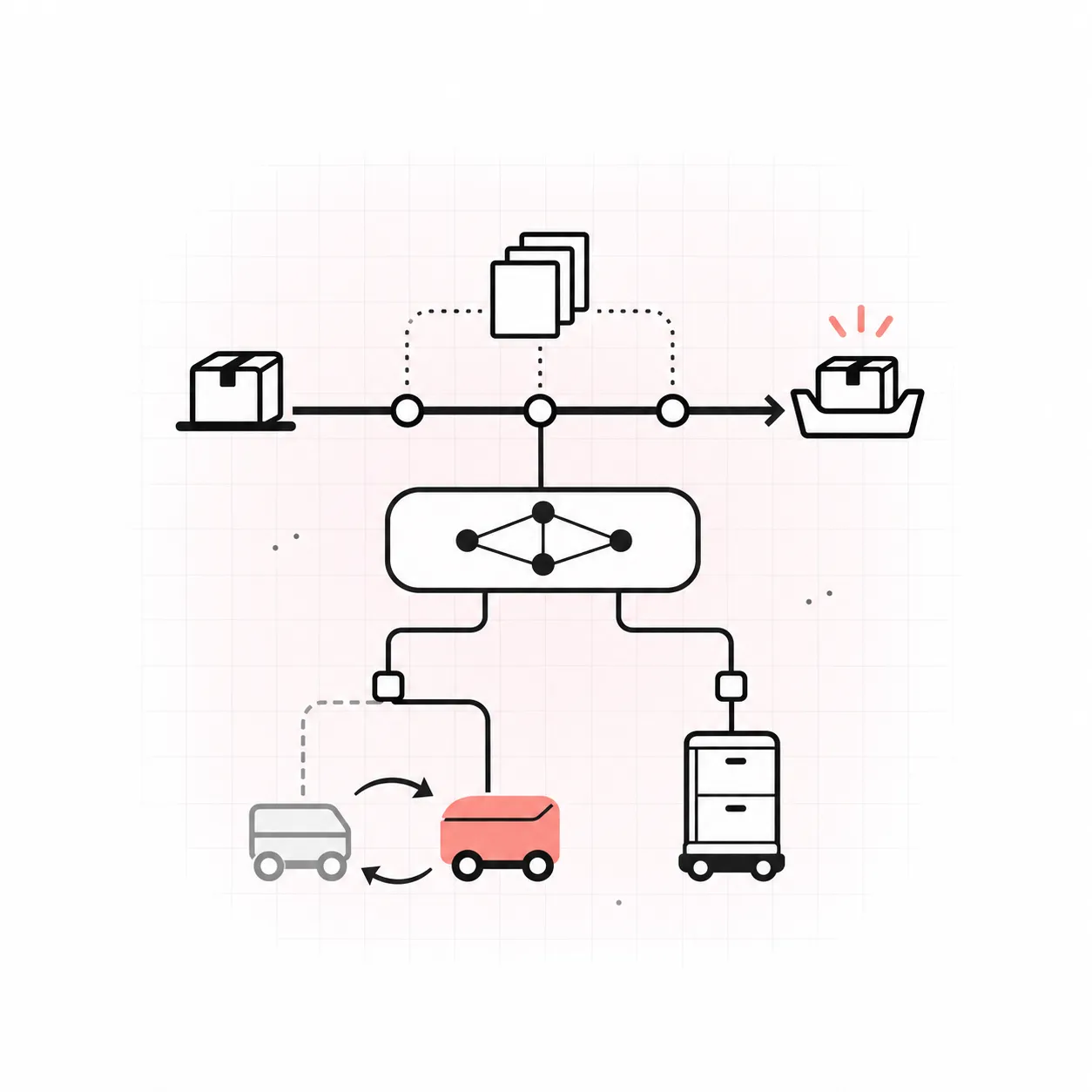
Robotics projects often begin with a specific machine. The customer, however, buys an outcome: a
specimen reaches the laboratory, a pallet reaches production or an order reaches the packing station.
That outcome should not be trapped inside one robot manufacturer's fleet manager.
A hospital deployment disclosed this week placed an Ottonomy delivery robot alongside existing
robots and coordinated them through a common operational layer. Separately, an India-linked
industrial robotics company raised new capital around a vendor-agnostic platform that connects
robots, machines and enterprise software. Together, these cases point toward a stable orchestration
layer above replaceable hardware.
The mission model is the real contract
A useful orchestration platform represents more than destinations. It records who requested the task,
cargo identity, custody state, access permissions, urgency, time windows, success evidence and
recovery rules. Every robot adapter translates this common contract into machine-specific commands.
Interoperability is not the same as safety
ISO 21423:2026 provides a communications framework for industrial mobile robots, fleet managers
and connected infrastructure. Its scope explicitly excludes safety requirements, navigation, medical
applications and public roads. A common data model therefore complements, rather than replaces,
vehicle safety, site risk assessment and operational controls.
Make replacement a designed workflow
A customer should be able to add or replace a robot without losing maps, task history, dashboard
metrics or business-system integrations. That requires versioned adapters, capability discovery,
standard event logging, simulation and a controlled migration process.
A proposed Fainzy platform direction would keep mission and custody logic independent of ZiBOT or
MiraX, expose standard adapters for elevators, doors and enterprise systems, and support selected
third-party machines where commercially useful. This is a proposed strategy, not a claim that Fainzy
currently operates a mixed-vendor fleet.
The robot may change during a ten-year facility contract. The mission history, customer workflow and
safety evidence should not.