Autonomous delivery is often discussed as a contest between vehicle designs. One robot has larger
wheels, another carries more cargo and another can operate indoors. Yet a customer does not
fundamentally need a particular machine. The customer needs an item moved safely, on time and at an
acceptable total cost.
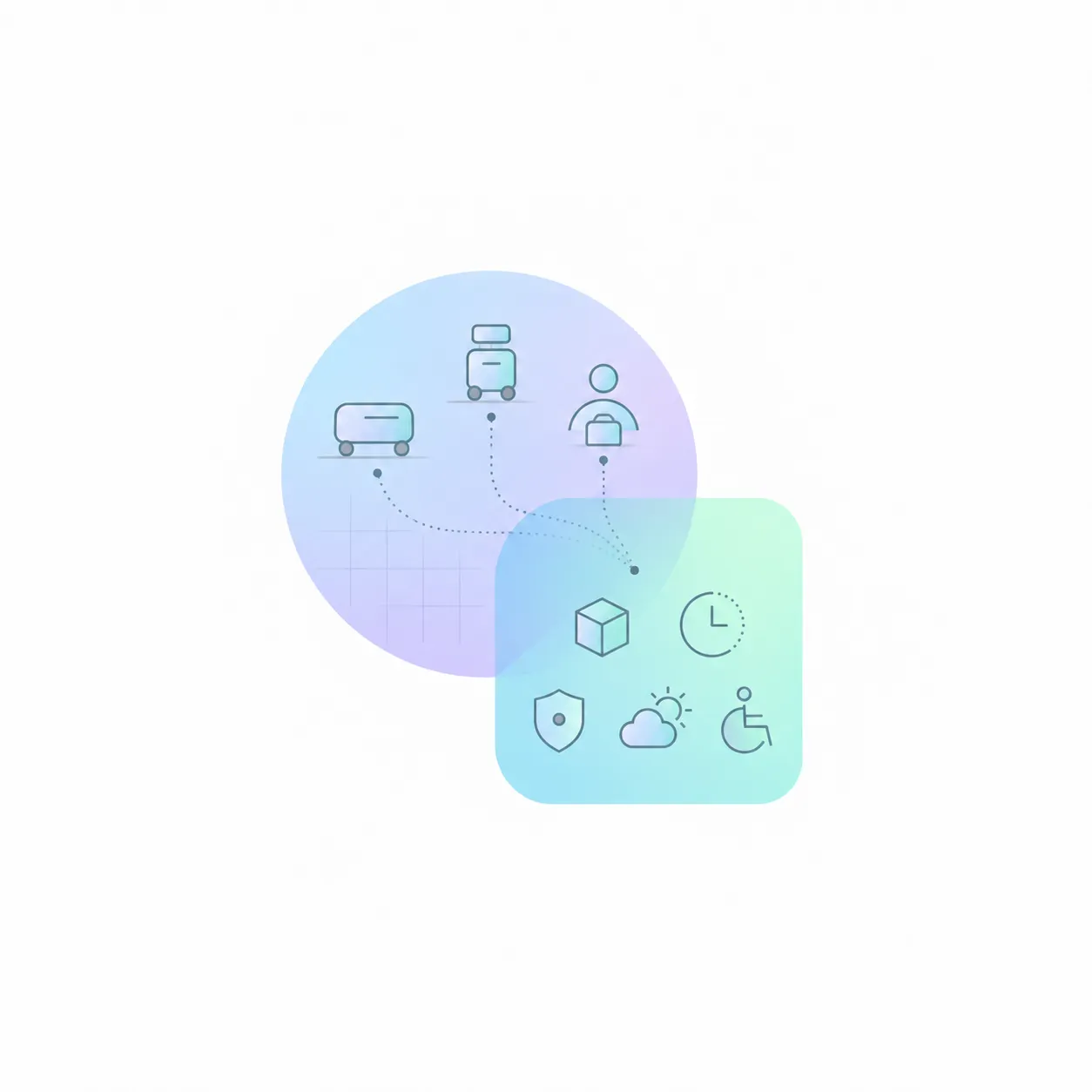
That distinction changes the architecture of the service. A delivery mission can be described through
payload size, weight, temperature, urgency, custody, route accessibility, weather, recipient availability
and service-level requirements. Once the mission is expressed in this hardware-neutral form, an
orchestration layer can assign it to a human courier, outdoor robot, indoor robot or another approved
delivery mode.
This mission layer can become more durable than the hardware beneath it. Vehicles will change as
batteries, sensors and autonomy improve. Suppliers may be replaced. The mission record, merchant
integration, customer communication, safety constraints and operating evidence must remain stable.
That continuity protects the customer while allowing the operator to improve the fleet.
The same approach also exposes true economics. A mode should not be selected because it appears
technologically advanced. It should be selected because it can complete that particular mission with the
required reliability and the lowest complete cost—including loading, remote assistance, charging,
maintenance and failed handoffs.
For design teams, the implication is practical: define the service contract before optimizing the machine.
The robot then becomes one capable executor inside a larger delivery system.
Fainzy perspective
Fainzy could apply this strategy by defining one mission schema across ZiBOT, MiraX and
human-assisted workflows. This is a proposed product direction—not a claim of an already deployed
multimodal platform. The first implementation should focus on shared order states, custody events,
safety constraints and outcome metrics.