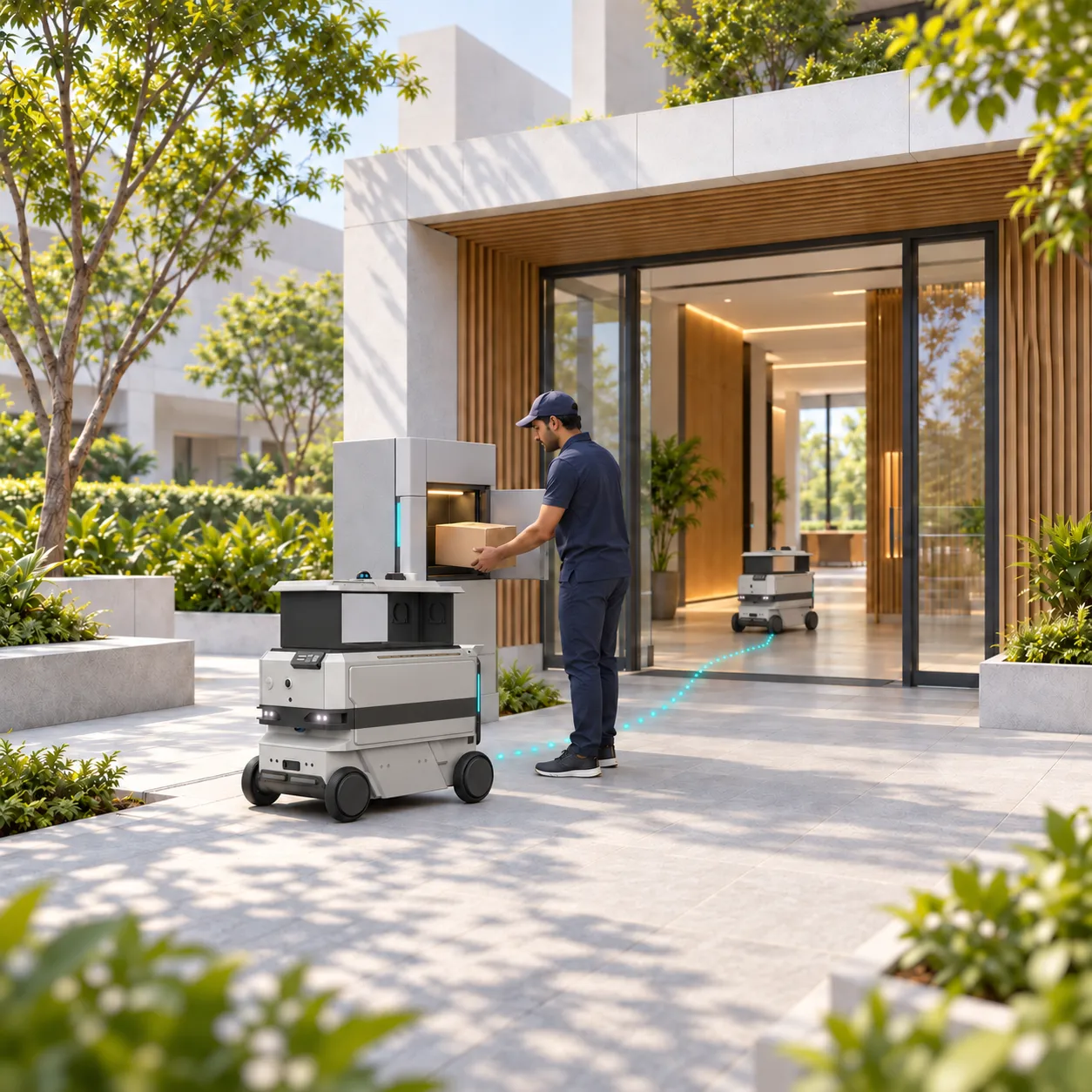
A delivery service encounters many environments in one journey. A road is different from a pedestrian path;
a building lobby is different from a corridor; the final exchange is different from every metre that came
before it. Each part has its own access, timing and supervision requirements. Treating that journey as one
identical transport problem can make automation unnecessarily difficult.
A network organized around the order
DoorDash's 30 September drone-system announcement illustrates a broader approach. Its planned
air-delivery pilots sit within an Autonomous Delivery Platform that also coordinates human couriers and
ground robots. The important idea is shared dispatch: deciding which delivery method suits an order before
committing a vehicle. The announcement establishes a direction and planned trials; it does not establish
widespread drone availability.
Fainzy's perspective
For Fainzy, a practical next step would be to define a shared mission and custody layer across ZiBOT, MiraX
and supported human handoffs. A pilot could begin with one repeated outdoor-to-indoor flow, clear
capability limits and a named operator responsible for recovery. These are proposed design priorities, rather
than a claim that every integration is already implemented. The ambition is a coordinated service in which
each component performs a useful part of the journey and the complete delivery remains understandable to
the customer.