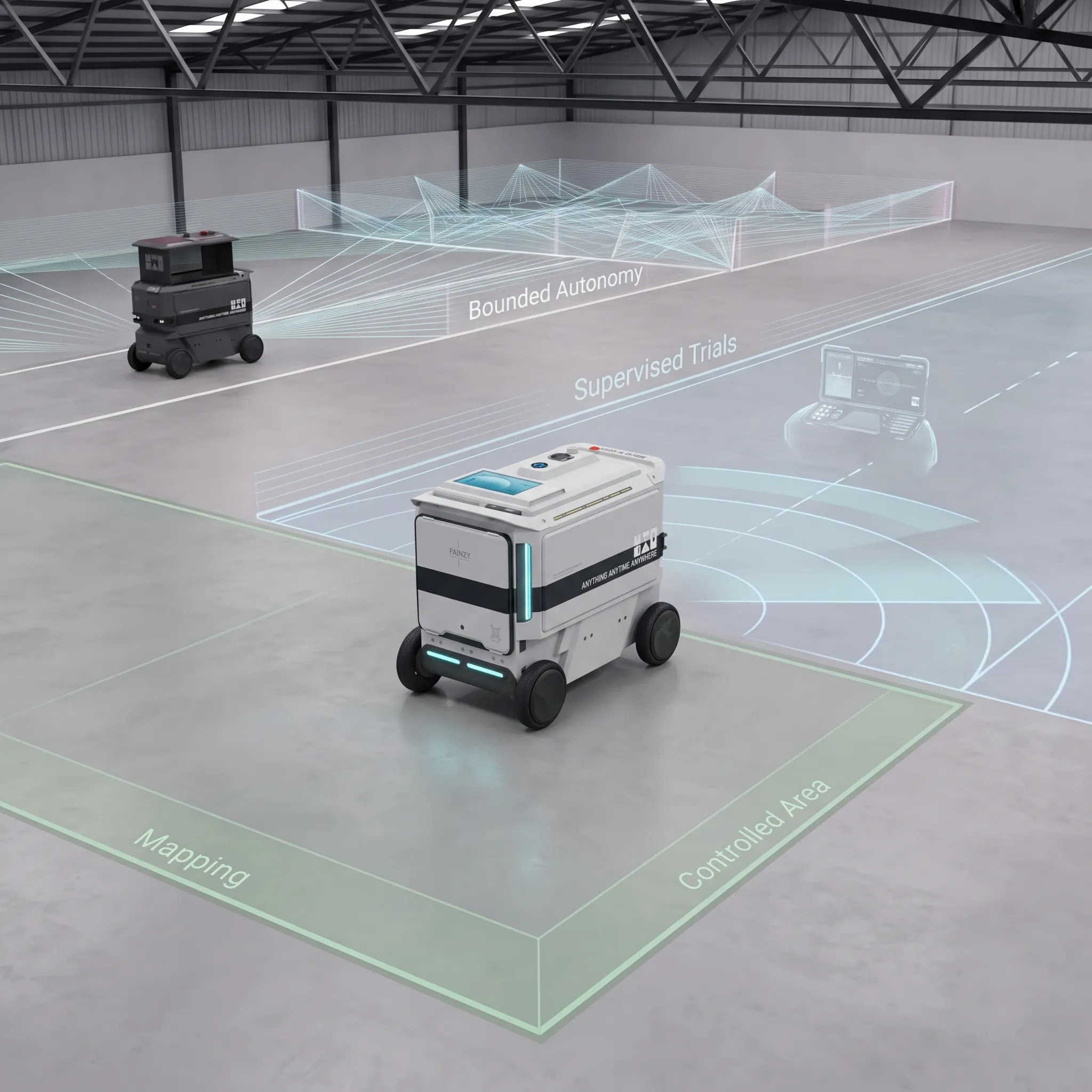
A small autonomous-vehicle rollout in London has begun with human safety drivers while driverless approval remains pending. This reflects a practical deployment pattern: begin with mapping and controlled testing, progress through onboard or remote supervision, and reduce human oversight only after sufficient operational evidence has been collected.
The level of autonomy should therefore be described precisely. A supervised vehicle is not fully autonomous simply because it can steer and navigate by itself. Each reduction in supervision must be supported by performance data, defined failure responses and a clearly bounded ODD - Operational Design Domain - meaning the conditions and environments in which the system is designed to operate.
The Fainzy Perspective
Glide can follow a progressive evidence ladder: closed-site testing, safety-operator supervision, remote supervision, autonomous operation within a bounded environment and, eventually, broader driverless service where regulations permit.
This approach also gives Fainzy opportunities to identify failures earlier without making claims that exceed the system's verified capability.