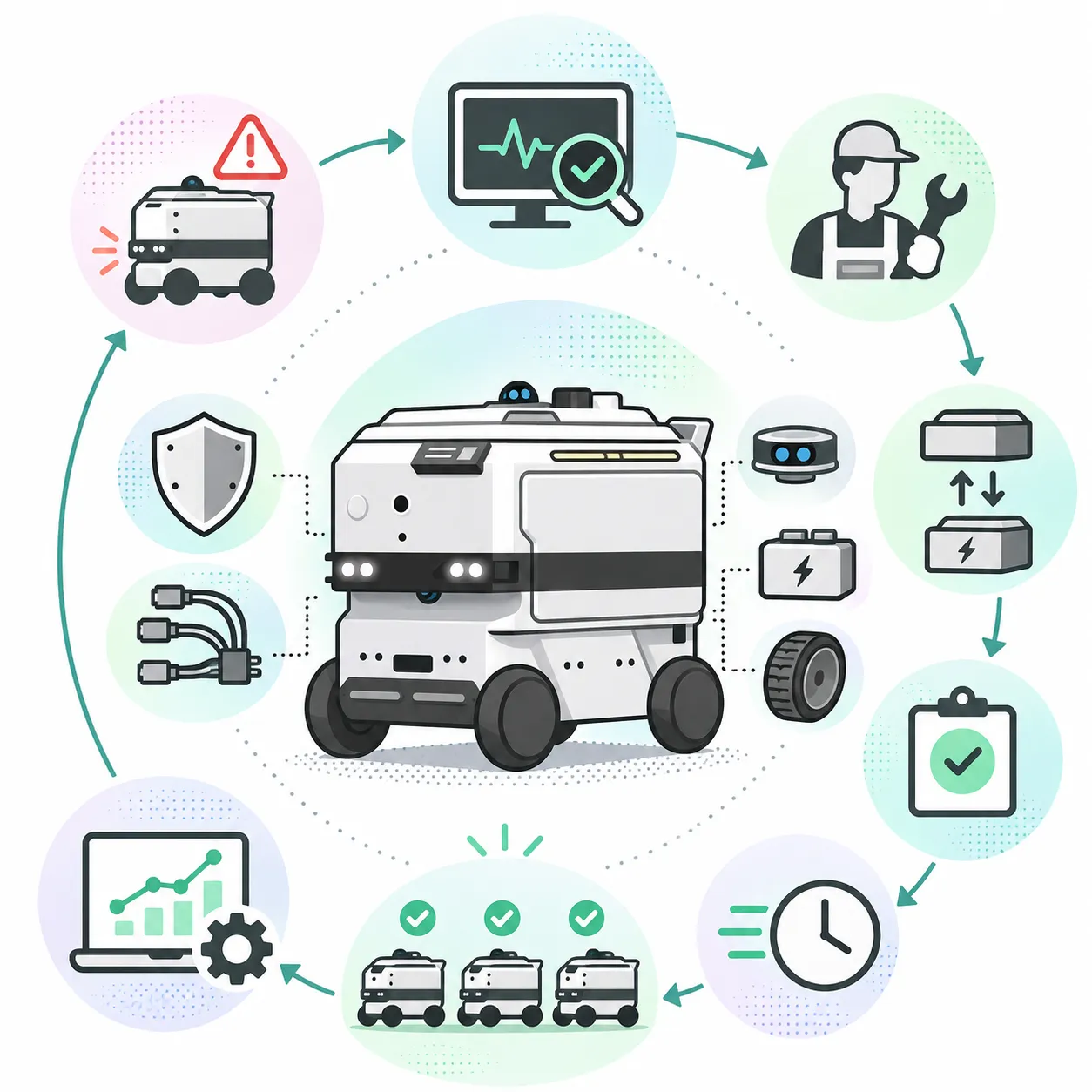
Autonomy teams naturally focus on perception, planning and control. Mature deployments expose
another performance layer: connectors loosen, cables wear, wheels and drives need replacement,
panels are struck and emergency stops are triggered by the environment. Every repair hour removes
productive capacity from the fleet.
A new logistics robot generation was designed using evidence from more than 100,000 operating
hours and tens of millions of handled boxes. The changes are revealing: 81 percent less internal
cabling, automotive-grade connectors, continuous-rotation joints, more robust panels, onboard
diagnostics and a swerve-drive replacement reduced from a full day to roughly one hour.
Mean time to repair belongs beside autonomy success rate
A commercial robot should be evaluated through availability, not only mission completion. Availability
combines reliability with repair speed. A component may fail infrequently yet still create poor fleet
economics if diagnosis, access, calibration or replacement takes too long.
Design the service path with the component
Each critical component needs a removal path, connector strategy, alignment method, calibration
routine and acceptance test. The field technician should know what can be replaced locally, what
requires depot service and what invalidates the safety case. Diagnostic logs must point toward an
actionable fault, not simply report that the robot stopped.
Maintenance data should change the next design
Fleet telemetry should connect failure mode, environmental condition, component revision, repair
time and recurrence. This turns operating experience into engineering priorities. Cable reduction,
connector upgrades and modular swaps are valuable because they address observed downtime rather
than adding a feature customers may never use.
A proposed Fainzy design review would set replaceability targets for wheels, compute, sensor pods,
batteries, cargo mechanisms and steering modules; record mean time to diagnose and repair; and
define which changes trigger revalidation. These are proposed product-development controls, not
claims about current field performance.