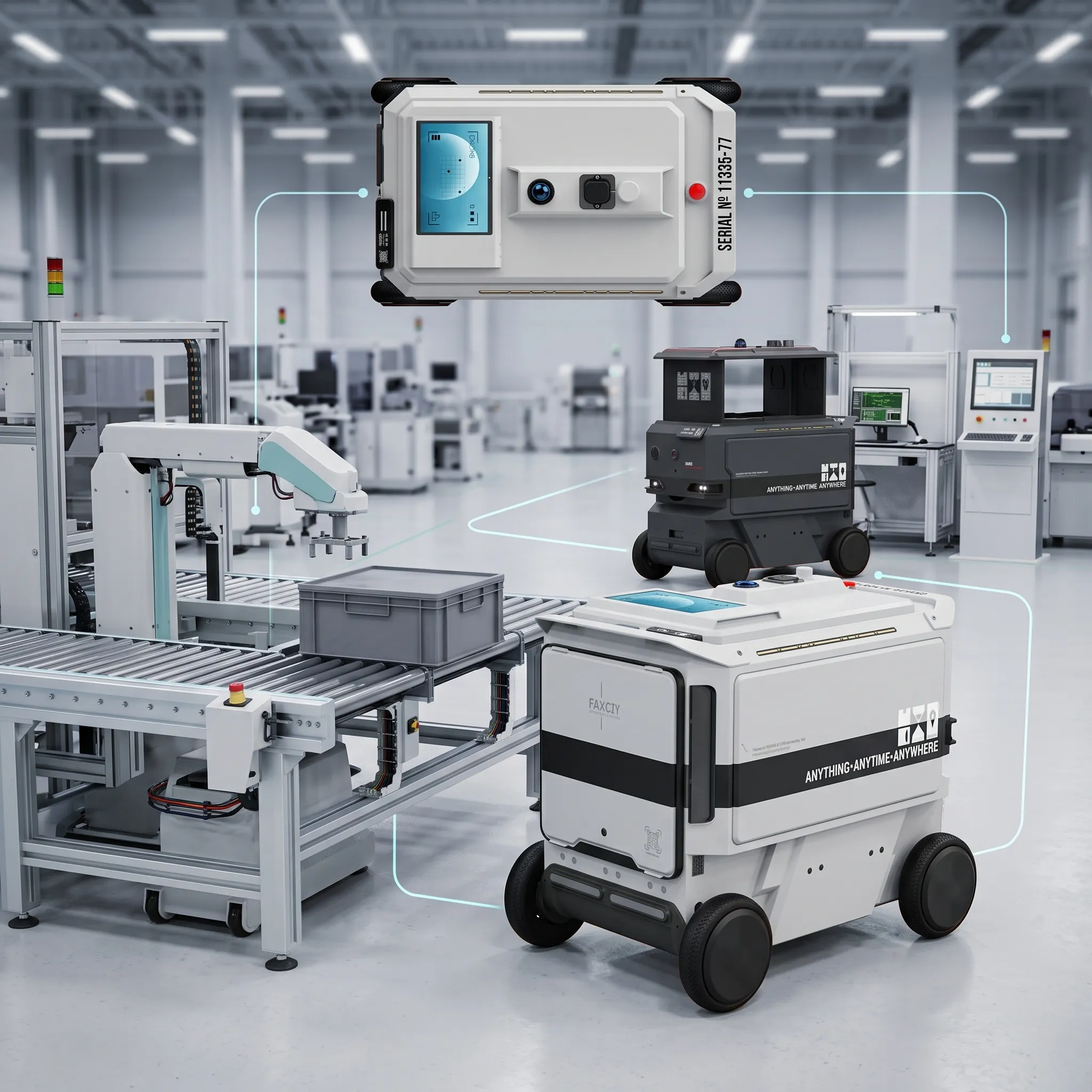
An autonomous mobile robot rollout at Nissan's Smyrna manufacturing facility illustrates the operational burden behind large-scale automation. Reported difficulties included conflicting missions, production-system integration and intensive on-site stabilization - even though the robots themselves were capable of performing their transport tasks.
Robot hardware is therefore only one part of the commercial system. Mapping, workflow design, facility integration, recovery engineering, monitoring, staff training, software change management and fallback operations can determine whether a deployment succeeds. These requirements become especially important when multiple robots interact with production equipment and shared destinations.
The Fainzy Perspective
Fainzy should distinguish between robot hardware, deployment engineering and continuing operational support when preparing commercial proposals.
RaaS - Robotics as a Service - pricing should define what is included in the recurring fee and what requires a separate integration or stabilization charge. This protects project economics while making responsibilities clearer for customers.