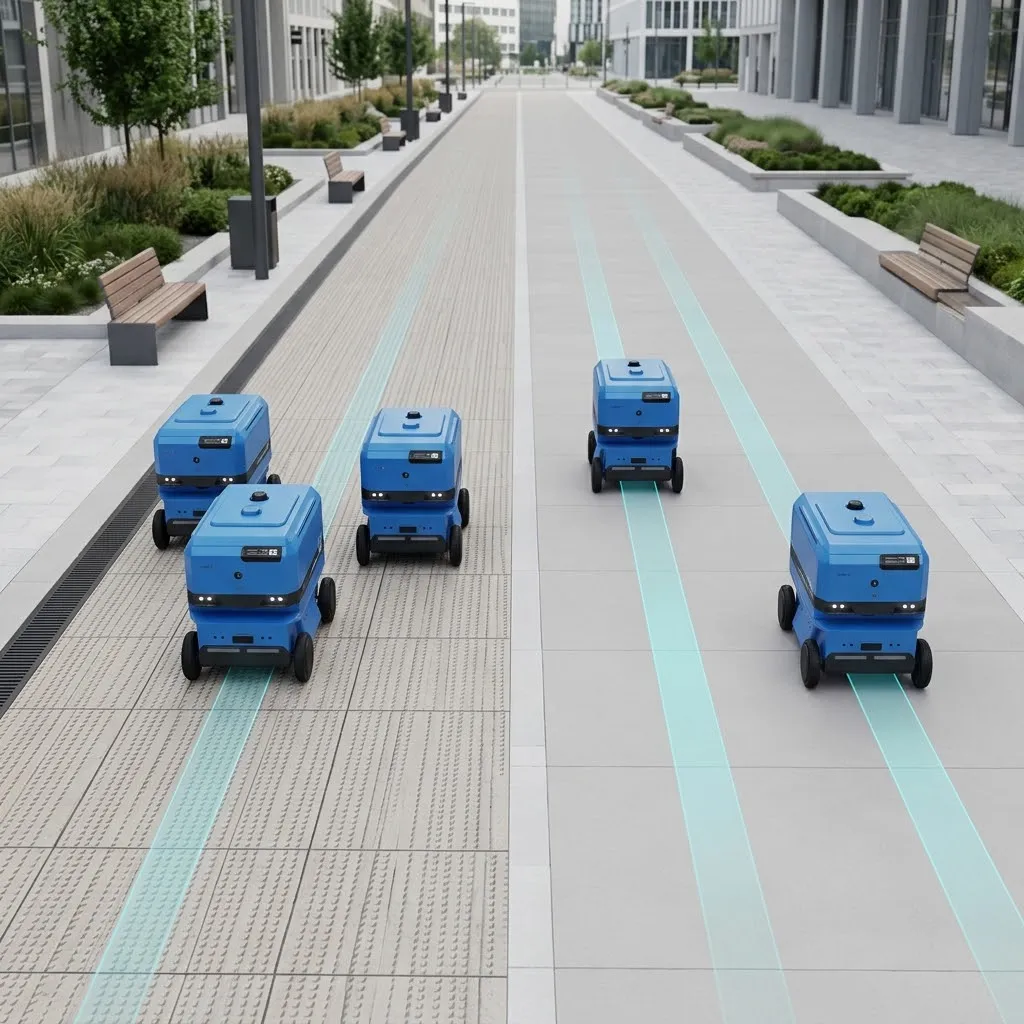
A cluster of delivery robots recently obstructed a Chicago sidewalk after several units leaving a station were rerouted at the same time. Although each robot may have continued following its local obstacle-avoidance rules, their combined behaviour created a fleet-level accessibility and safety problem.
This demonstrates why collision avoidance alone is insufficient. A fleet platform must regulate simultaneous departures, robot density, shared recovery locations and corridor occupancy. It should also detect clustering, preserve an accessible pedestrian path, disperse stationary robots and provide operators with a controlled fleet-wide pause-and-release function.
The Fainzy Perspective
Fainzy's safety architecture should evaluate two layers independently: whether an individual ZiBOT fails safely and whether multiple ZiBOTs fail safely together.
Useful fleet-level metrics could include maximum obstruction time, minimum remaining pedestrian clearance, robot density per route segment, deadlock-recovery time and the number of simultaneous remote interventions. These controls should be tested before increasing fleet size.