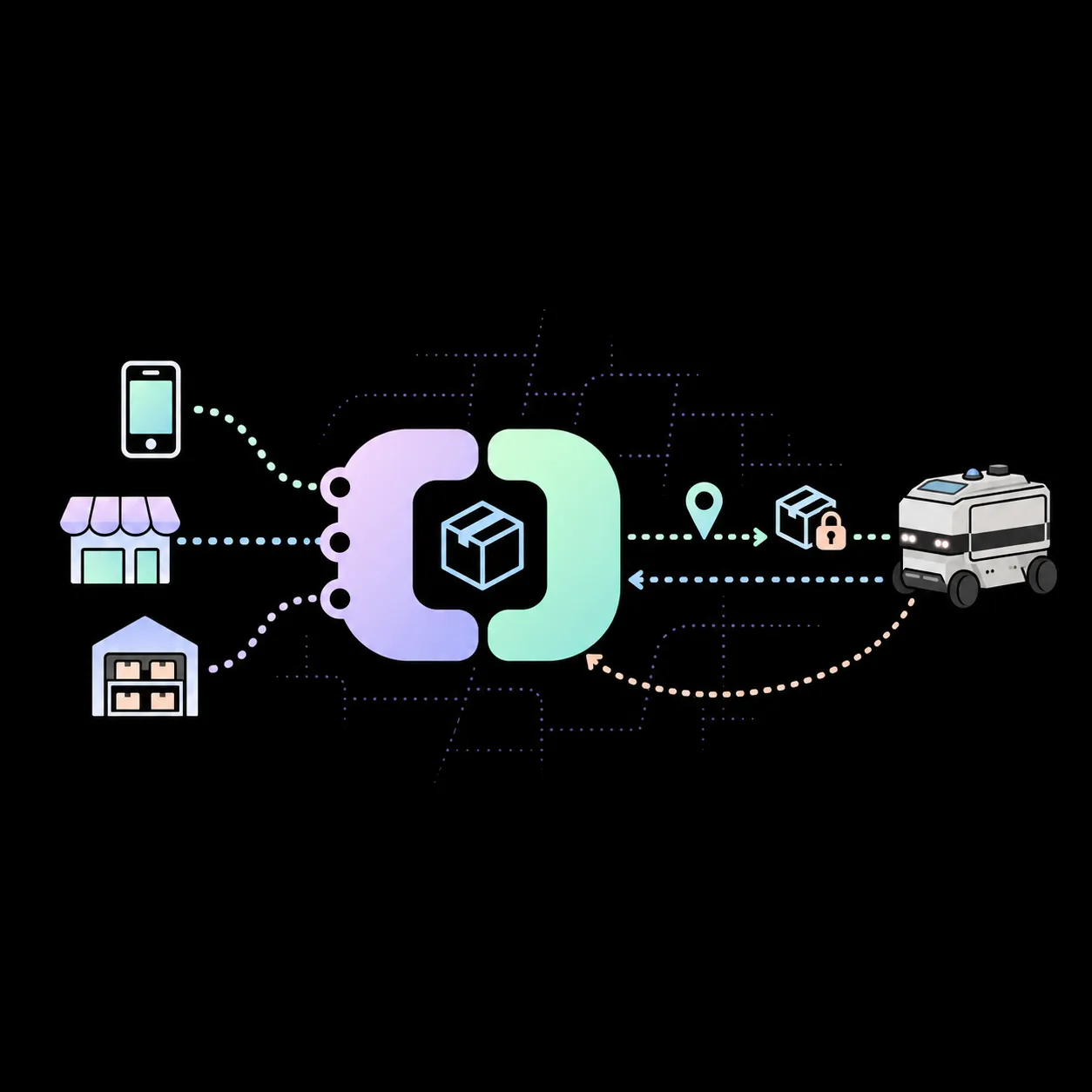
A public delivery API changes the robot from a closed feature inside one marketplace into a service
that other businesses and software agents can request. The strategic opportunity is demand
portability: capacity can serve office logistics, local retail, healthcare or new applications without
rebuilding the autonomy stack for every customer.
The basic interface sounds simple: request a pickup, confirm a destination and track the mission. Real
delivery requires more. The system must know whether cargo is ready, who may unlock it, how long
the robot can wait, what happens when access is blocked and who owns the decision to cancel or
reroute.
The mission contract needs explicit states
A robust API should expose requested, accepted, dispatched, arrived, loaded, in transit, blocked,
remotely assisted, delivered, returned and failed states. Each transition needs an owner, timeout,
retry policy and auditable event record.
A sandbox should rehearse operational failure
Simulation is most useful when it includes late merchants, unavailable elevators, expired credentials,
compartment faults, network loss, cancelled orders and inaccessible destinations. A happy-path demo
proves connectivity; edge-case rehearsal reduces deployment risk.
Safety authority cannot be outsourced to the client
External applications may request missions, but the robot fleet must retain authority over route
legality, payload limits, weather restrictions, battery reserve and safe-stop behaviour. Idempotent
commands, authentication, rate limits and permission scopes are part of the safety boundary.
A proposed Fainzy fleet API would use a common mission schema across ZiBOT, MiraX and future
partner machines, with versioned states, webhooks, NFC or QR custody events, tenant isolation,
simulation and a clear division between customer intent and safety-critical control. This is a proposed
platform direction, not a description of an already deployed public API.
The valuable API is not the one that makes a robot move. It is the one that makes the complete
delivery promise observable, recoverable and safe.