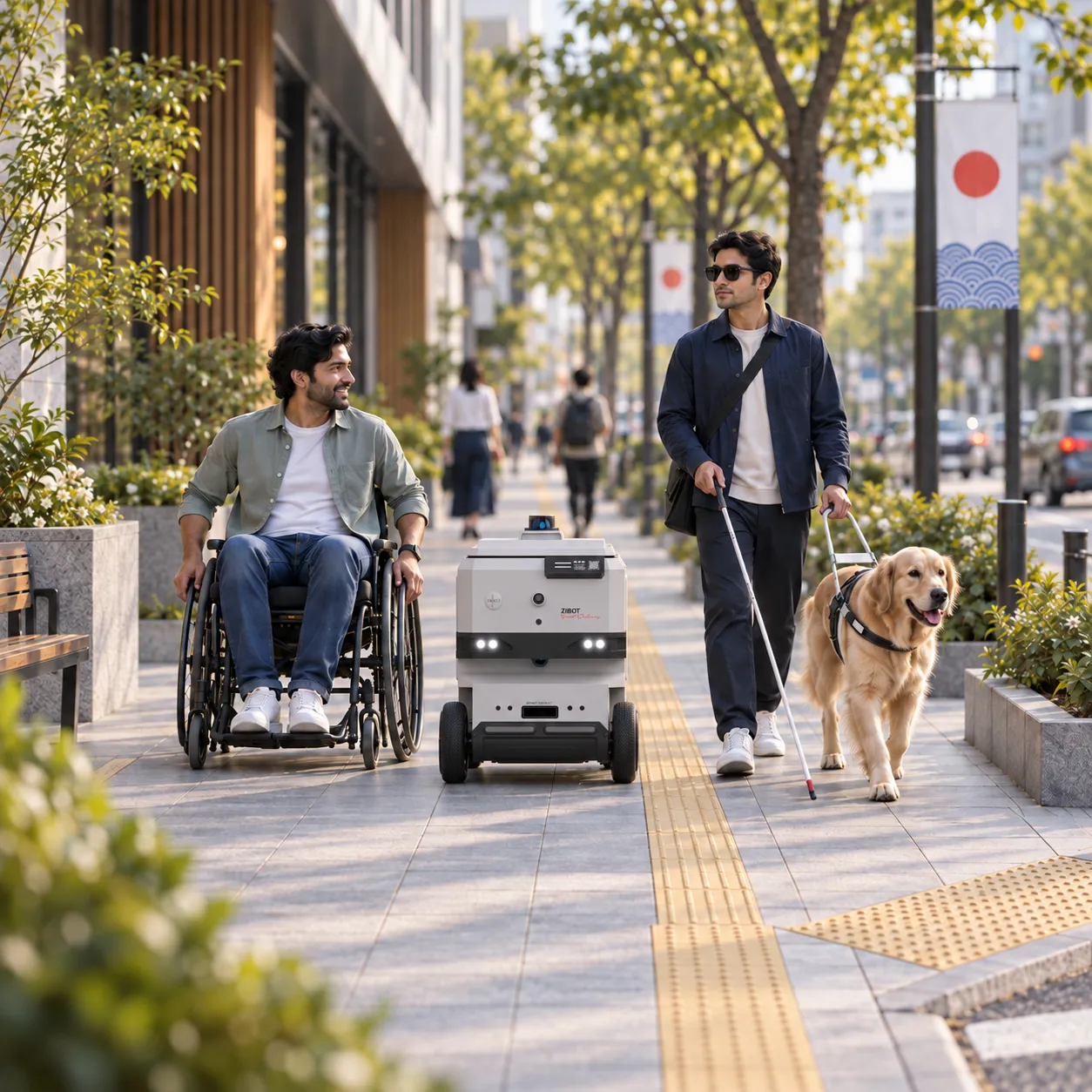
The popular image of robot safety is simple: a pedestrian steps into the path, the robot detects the
person and stops. If no collision occurs, the system appears to have worked.
Real pavements are more complicated. A stationary robot can be safe in isolation while making the
environment unsafe for everyone else. It may narrow the path below wheelchair clearance, stop across
tactile paving, confuse a visually impaired pedestrian or join other robots in a cluster that blocks the
route.
That distinction matters because delivery robots share infrastructure designed primarily for people.
Their safety case cannot stop at obstacle detection. It must include the space the robot occupies, the
behaviour of the fleet and the ability of different pedestrians to understand and pass it.
From collision avoidance to accessibility assurance
Accessibility should be translated into measurable product requirements. A deployment team should
know the minimum passage width that must remain open, the maximum time a robot may obstruct a
route and the locations where stopping is never permitted.
• Curb ramps, pedestrian crossings and tactile paving must remain clear.
• The robot should yield early and predictably rather than stopping at the last moment.
• Safe-stop locations must be allocated so several robots cannot choose the same point.
• Fleet software should detect clustering and release robots gradually from depots.
• Audible cues should be tested with visually impaired users, not designed only by engineers.
The Fainzy perspective
Human-centred autonomy is not achieved merely by preventing impact. It means allowing people with
different physical and sensory abilities to move confidently without adapting themselves to the robot.
FAINZY TECHNOLOGIES / AUTONOMOUS DELIVERY ROBOTICS 10
Accessibility should shape the route planner, stopping logic, fleet manager and physical dimensions
from the beginning.
A robot that never touches a pedestrian can still fail the public-space test. The better
standard is not “Did it avoid a collision?” but “Did everyone retain a safe,
understandable and dignified path?”